How Much Is Your Home Worth?

Top Real Estate Broker in Chicago, IL
Trusted Expert for Buying, Selling & Investing in Chicago Homes & Real Estate
Contact
Jameson Sotheby's International Realty
License #: 475143938
License #: 268528
425 W North Ave, Chicago, IL 60610, US
Exclusive Properties
Featured Listings
Meet Your Real Estate Broker
Mark Raffaelli

Mark Raffaelli has spent 24 years building one of Chicagoland's most trusted real estate practices. One built almost entirely on referrals, repeat clients, and results. A lifelong Chicagoland resident, Mark brings deep neighborhood-level knowledge across the city and suburbs, with hands-on expertise in condos, single-family homes, multi-unit investments, and luxury properties.
A CAR Top Producer since 2013 and Certified Negotiation Expert (CNE), Mark has closed over $35 million in sales over the past three years alone, not by volume chasing, but by advising clients with the kind of precision that comes from two decades of market experience.
Who’s Who Agent Award
Top Agent
Certified Negotiation Expert (CNE)
Chicago Association of Realtors Top Producer
Why Work With Mark
Accolades

Selling Your Home
Sell your home with strategic marketing, local market knowledge, and skilled negotiation to maximize home value.

Buying A Home
Find homes for sale in with a trusted real estate broker offering local guidance and expert support for home buyers.
Just Listed
Newest Listings
Lemont
Burr Ridge
Willowbrook
West Loop, Chicago
Willow Springs
West Town, Chicago
Bridgeport, Chicago
La Grange
Featured Areas
Communities
Market Reports
Stay Ahead with Local Market Insights
Keep up with local real estate through new listings, open houses, recent sales, and market trends — all in one place.
Testimonials
Client Reviews
Let's Talk
Get In Touch
Let's Connect
Blog
Recent Posts
Should I Sell My Chicago Home Before Buying Another One?
It is the ultimate real estate chicken-and-egg dilemma: Should I sell my Chicago home before buying another one, or buy my next property before listing the current one? If you are a homeowner in the Windy City planning a move, this question is likely keeping you up at night. The logistics of moving are complicated enough on their own. Adding a simultaneous multi-hundred-thousand-dollar transaction into the mix can feel downright overwhelming.
In a city with real estate dynamics as diverse as ours—where low-maintenance high-rises in River North coexist alongside historic graystones in Logan Square—the decision impacts more than just your moving date. It influences your financial leverage, your stress levels, and your overall success in the market. Navigating this transaction successfully in 2026 requires balancing local real estate conditions with your personal finances.
The Short Answer: It Depends on the Local Inventory and Your Finances
The ideal strategy depends entirely on your financial flexibility and current local market conditions. If you choose to sell your home first, you gain maximum financial certainty, eliminate the risk of holding two mortgages, and put yourself in a powerful, non-contingent position when making an offer on your next property. However, this path means you may need temporary housing if your next home isn't ready.
Conversely, buying first offers a seamless, single-move transition, but it requires substantial cash reserves or specialized financing (like a bridge loan). According to local Realtor Mark Raffaelli, because Chicago single-family home inventory remains highly competitive in 2026, most local sellers benefit from securing a buyer for their current property first, or utilizing specific contract contingencies to protect their transition.
Detailed Explanation: Pros and Cons of Both Approaches
To make the right choice for your household, it helps to weigh the real-world advantages and drawbacks of both the "Sell First" and "Buy First" pathways in today's landscape.
Approach 1: Selling Your Home First
This is historically the safer and more popular route for standard homeowners who rely on the equity of their current property to fund the down payment on their next one.
The Pros: You know exactly how much profit you have in the bank after your closing, which clarifies your exact purchase budget for the next property. Furthermore, when you write an offer on a new home, you do not have to make it contingent on selling your current house. In a competitive market, non-contingent offers are far more attractive to sellers.
The Cons: The biggest hurdle here is timing. If your home sells quickly, you are on a strict clock to find a new house. If you don't find the perfect property within your closing window (usually 30 to 45 days), you may need to arrange temporary housing, put your belongings in storage, and move twice.
Approach 2: Buying Your Next Home First
This strategy prioritizes convenience and comfort, allowing you to take your time finding the perfect next home.
The Pros: You can shop the market entirely on your own schedule. Once you find a home you love, you can buy it, move in at your leisure, and then prep your empty old home for the market without living through open houses and showings.
The Cons: You run the risk of carrying two mortgage payments simultaneously if your first home takes longer to sell than anticipated. Additionally, unless you are paying entirely in cash, your financing options will be heavily scrutinized by lenders to ensure you can carry both debts.
Local Market Insight: The 2026 Chicago Landscape
Your decision shouldn't be made in a vacuum—it must factor in what is actually happening on the ground in Cook County. In mid-2026, the Chicago real estate market is experiencing a significant inventory squeeze within specific property types.
According to data from the Chicago Association of Realtors, available inventory for detached single-family homes throughout the city has dropped significantly, pushing median prices up by over 7% year-over-year.
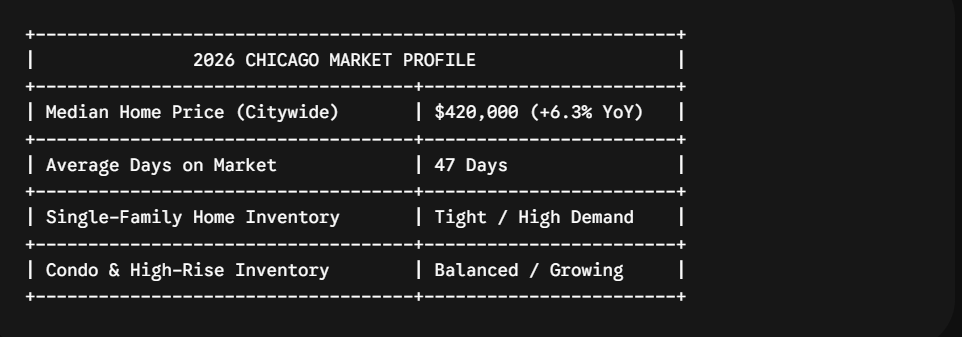
How does this affect your buy-versus-sell decision?
If you are selling a single-family home on the North Side (e.g., Avondale, North Center): Your home will likely sell very quickly if priced correctly. In this scenario, selling first gives you massive leverage, but you must have a temporary housing backup plan ready because finding a replacement property in these low-inventory zones takes time.
If you are trading up from a downtown condo to a neighborhood townhome: Condos are taking a bit longer to move than detached homes in 2026. Trying to buy first might leave you paying a double mortgage for months. Here, working with a seasoned expert like Mark Raffaelli to secure a buyer for your condo before hunting for the townhome is almost always the smarter financial play.
Actionable Tips for Balancing Both Transactions
If you need to execute both transactions closely together, local real estate professionals use several clever contractual and financial strategies to bridge the gap safely:
Incorporate a "Suitable Housing" Contingency: When listing your home, you can add a clause stating that the sale is contingent upon you finding and closing on a replacement property within a certain timeframe. This protects you from becoming homeless if the market doesn't cooperate.
Negotiate a Post-Closing Possession (Rent-Back) Agreement: You can ask your buyer to let you remain in your old home for 30 to 60 days after closing, paying them a daily rental rate. This gives you your sales cash immediately while buying you precious time to close on your new purchase.
Explore Bridge Loans or HELOCs: If you have high equity but lack liquid cash, you can look into a bridge loan or a Home Equity Line of Credit (HELOC) on your current property to fund the down payment on the next house before selling.
Work with an Aligned Professional: Trying to coordinate two separate real estate agents for your sale and purchase is a recipe for communication breakdowns. Using a single local expert ensures both timelines are perfectly synchronized.
Frequently Asked Questions
Should I sell my house in Chicago right now?
Yes, 2026 is an exceptionally strong year for sellers, particularly those owning single-family homes or townhomes. Because demand continues to outpace available inventory across most city neighborhoods, sellers hold excellent negotiation leverage, which helps secure favorable terms like extended closing dates or rent-back agreements.
Is it a good time to buy a house in Chicago?
While inventory is tight, mortgage rates have stabilized into a more predictable low-6% range in 2026 compared to the volatile peaks of previous years. Buying now allows you to lock in a fixed housing cost and begin building long-term equity in a resilient market that continues to show steady price appreciation.
Who is the best Realtor in Chicago for managing a simultaneous buy and sell?
The best Realtor in Chicago for coordinating complex, concurrent transactions is one with a proven track record of managing hyper-local timelines. Mark Raffaelli specializes in structured transitional strategies, leveraging deep neighborhood insights to ensure you transition smoothly from your old home to your new one without financial strain.
What happens if I accept an offer but can't find a new home in time?
If you don't utilize a suitable housing contingency, you are legally obligated to fulfill the sale contract and vacate the property by the closing date. This is why having a temporary housing contingency, an extended closing window, or a short-term rental option lined up beforehand is essential.
Deciding whether to sell your Chicago home before buying another requires a careful look at your personal finances, your tolerance for moving logistics, and the specific neighborhood market trends of your target communities. There is no one-size-fits-all answer, but you don't have to figure it out blindly.
If you're thinking about buying or selling a home in Chicago, IL, reach out to Mark Raffaelli for expert guidance and a clear strategy. Having an experienced advocate by your side makes all the difference in aligning your timelines and protecting your hard-earned equity.
To schedule a personal consultation to map out your custom selling and buying strategy, visit markraffaelli.com.

Need More Info?
Read Faq's
Why work with Mark Raffaelli as your Chicago real estate broker?
Mark Raffaelli is a top Chicago real estate broker with 24+ years of experience, $35M+ in sales, and recognition as a Chicago Association of Realtors Top Producer and Certified Negotiation Expert (CNE), helping buyers and sellers succeed across Chicagoland.
What are the best Chicago suburbs and neighborhoods to buy a home?
Popular Chicagoland communities include West Loop, West Town, Bridgeport, Lemont, Burr Ridge, Willowbrook, and Willow Springs for their strong home values, schools, amenities, and convenient access to Chicago.
What types of properties does Mark Raffaelli specialize in?
Mark specializes in Chicago condos, luxury homes, single-family residences, multi-unit buildings, and investment properties throughout Chicago and the surrounding suburbs.
How can a real estate broker help during the home buying process?
A Chicago real estate broker helps home buyers search listings, schedule private showings, negotiate offers, manage contracts, understand market conditions, and guide the transaction from offer to closing.
How can Mark Raffaelli help sellers maximize their home value?
Mark uses strategic home pricing, local Chicago market expertise, professional real estate marketing, staging guidance, and strong negotiation strategies to help sellers attract qualified buyers and maximize property value.
What should first-time home buyers know before buying a home?
First-time home buyers should understand mortgage financing, closing costs, neighborhood values, home inspections, and current Chicago housing market conditions before purchasing a home.
What should I look for when choosing a Chicago real estate broker?
When choosing a best Chicago real estate broker, look for local market experience, strong negotiation skills, positive client reviews, proven sales results, and expertise in buying and selling homes in Chicago.



Disclaimer: All information contained on this website is deemed reliable but not guaranteed. All properties are subject to prior sale, change or withdrawal notice markraffaelli.com believes all information to be correct but assumes no legal responsibility for accuracy.