
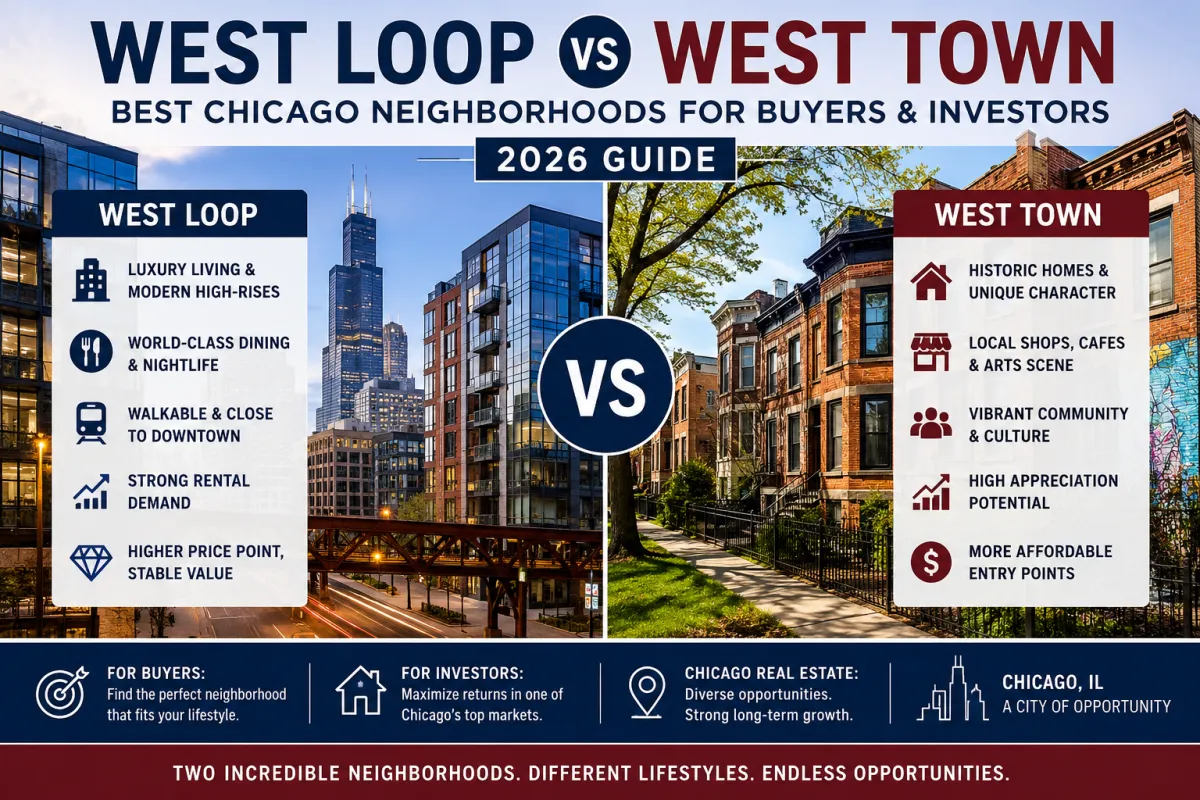
West Loop vs West Town: Best Chicago Neighborhoods for Buyers and Investors (2026 Guide)
Chicago’s real estate market continues to evolve, with certain neighborhoods consistently outperforming others in demand, appreciation, and lifestyle appeal. Among the most competitive areas, West Loop and West Town stand out as two of the strongest choices for both homebuyers and real estate investors.
If you're exploring opportunities with guidance from a trusted expert like Mark Raffaelli, understanding the differences between these two neighborhoods can help you make smarter, more profitable decisions in the Chicago market.
West Loop: Chicago’s Luxury Urban Hotspot
The West Loop has transformed from an industrial corridor into one of the most desirable urban neighborhoods in Chicago. Known for its luxury condos, modern loft conversions, and high-end dining scene, it attracts professionals, executives, and international buyers.
Why Buyers Love West Loop
West Loop offers a fast-paced, upscale lifestyle with everything within walking distance. Key highlights include:
Luxury high-rise condos with skyline views
Michelin-star restaurants and trendy dining spots
Proximity to downtown Chicago and the Loop
Strong job access in tech, finance, and corporate sectors
High walkability and transit connectivity
For buyers prioritizing convenience and modern living, West Loop remains one of the most competitive markets in the city.
Investment Perspective
From an investor standpoint, West Loop offers:
Strong long-term appreciation potential
High rental demand from young professionals
Low vacancy rates in luxury rentals
Stable resale value due to limited inventory
However, entry prices are higher compared to other Chicago neighborhoods, making it more suitable for premium investors.
West Town: Character, Growth, and Investment Opportunity
West Town offers a very different experience compared to West Loop. It blends historic charm, artistic culture, and strong investment upside, making it attractive to both homeowners and investors looking for value growth.
Why Buyers Choose West Town
West Town is known for its unique identity and community feel. Buyers are drawn to:
Historic greystone homes and renovated properties
Tree-lined residential streets
Local boutiques, cafes, and creative spaces
Strong neighborhood identity and culture
Proximity to Fulton Market and downtown Chicago
It appeals to buyers who want urban access without the density and pricing of downtown luxury towers.
Investment Perspective
West Town is especially attractive for investors due to:
More affordable entry points compared to West Loop
Strong appreciation potential as redevelopment continues
Opportunities in multi-unit buildings and rehab projects
Increasing demand from renters seeking proximity to downtown
For investors willing to take a long-term approach, West Town offers significant upside potential.
West Loop vs West Town: Key Differences
While both neighborhoods are strong markets, they serve different buyer profiles.
Price Range
West Loop: Premium pricing, luxury-focused
West Town: Moderate to high, more accessible entry points
Lifestyle
West Loop: Modern, fast-paced, luxury-driven
West Town: Cultural, artistic, residential balance
Investment Strategy
West Loop: Stable luxury rentals and long-term appreciation
West Town: Value growth, redevelopment, and flip opportunities
Buyer Profile
West Loop: Professionals, executives, luxury buyers
West Town: Families, creatives, investors, first-time buyers or seller
Market Trends Shaping Both Neighborhoods
The broader Chicago real estate market continues to be influenced by:
Limited inventory in desirable areas
Rising demand for walkable urban living
Strong rental market supported by job growth
Ongoing redevelopment in near-downtown neighborhoods
Interest rate fluctuations impacting buyer activity
Both West Loop and West Town are positioned to benefit from long-term urban growth trends.
Why Working With a Local Expert Matters
Navigating competitive neighborhoods like West Loop and West Town requires deep local knowledge, negotiation skill, and market timing. A professional real estate broker in Chicago IL helps clients:
Identify undervalued properties
Understand neighborhood-specific pricing trends
Negotiate stronger purchase or sale terms
Avoid overpaying in competitive bidding situations
Access off-market opportunities
Working with an experienced real estate professional like Mark Raffaelli ensures buyers and investors can make informed decisions backed by real market insight.
Final Thoughts
West Loop and West Town represent two of the most dynamic real estate opportunities in Chicago, each offering distinct advantages depending on your goals. Whether you’re seeking luxury urban living or long-term investment growth, both neighborhoods continue to show strong performance and demand.
With the right strategy—and the right broker—you can take full advantage of Chicago’s evolving real estate landscape and build lasting value in one of the Midwest’s most powerful markets.
FAQ: Chicago Neighborhoods & Suburban Real Estate
Q1: Which is better for investment—West Loop or West Town?
West Loop is better for stable luxury rental income and long-term appreciation, while West Town offers more value-driven opportunities like multi-unit properties, rehabs, and higher upside growth potential.
Q2: Is West Loop a good place to buy a home in Chicago?
Yes. West Loop is one of the most desirable neighborhoods in Chicago due to its luxury condos, strong job access, walkability, and high demand from professionals.
Q3: What type of buyers prefer West Town?
West Town attracts a mix of first-time buyers, families, and investors who want a balance of city access, historic charm, and more affordable pricing compared to downtown luxury areas.
Q4: How do suburbs like Lemont, Burr Ridge, Willowbrook, and Willow Springs compare to Bridgeport?
Suburbs like Lemont, Burr Ridge, Willowbrook, and Willow Springs generally offer larger homes, better schools, and quieter residential living compared to Bridgeport, which is closer to downtown Chicago and offers more urban, historic housing with faster access to the city.
Q5: Is Bridgeport a good neighborhood for first-time buyers?
Yes. Bridgeport is often considered a strong entry point for buyers who want affordability, proximity to downtown, and a neighborhood with long-term appreciation potential.
Q6: What is the biggest advantage of living in Chicago vs surrounding suburbs?
Living in Chicago offers better access to jobs, entertainment, dining, and transportation, while suburbs provide more space, newer homes, and a quieter lifestyle. The best choice depends on lifestyle and budget goals.