
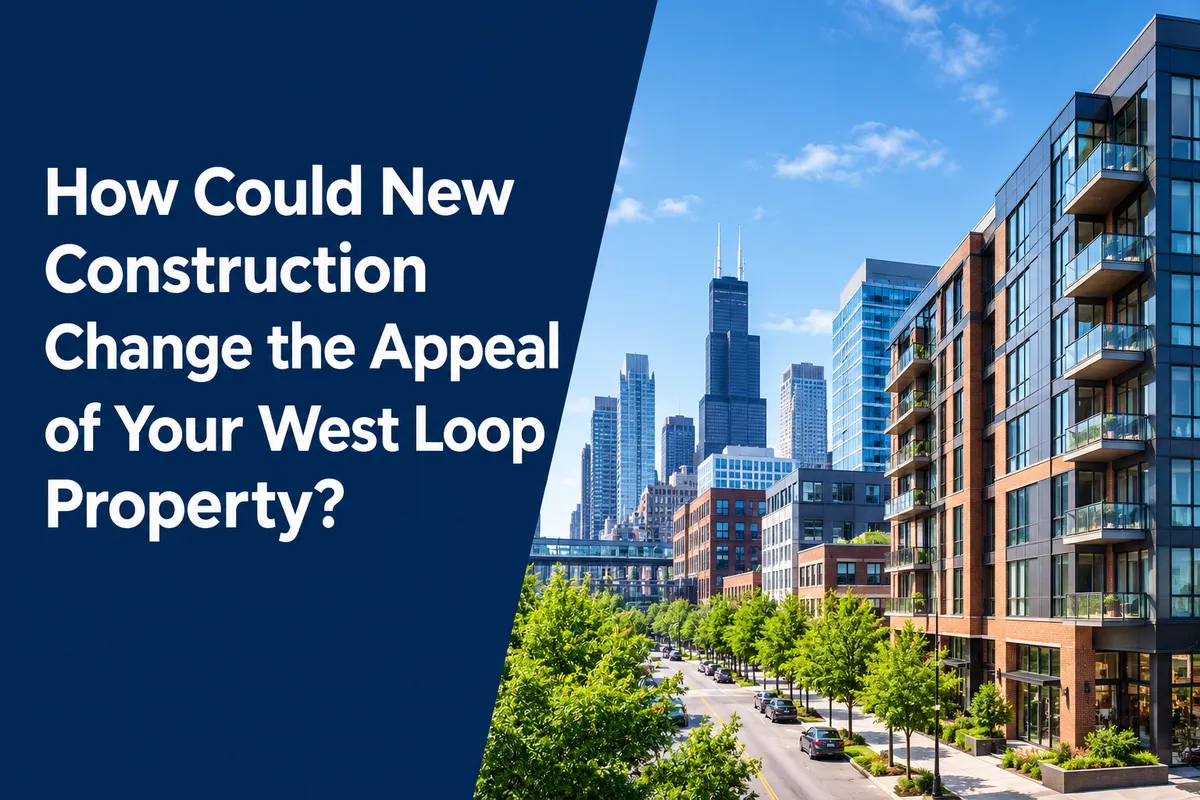
How Could New Construction Change the Appeal of Your West Loop Property?
New construction can change the way people experience a neighborhood, from the streets they walk to the homes they consider buying. In Chicago’s West Loop, development and property appeal are closely connected because buyers may evaluate not only an individual home or condominium but also the surrounding buildings, public spaces, transportation options, and everyday conveniences.
For property owners, these changes can create opportunities as well as new considerations. A nearby development may add useful amenities, introduce more activity, or change the character of a block. However, its effect on a specific property's appeal depends on the location, the type of construction, the property's features, and what prospective buyers value.
Mark Raffaelli works with clients navigating real estate decisions across Chicago-area communities, including West Loop. Understanding how new construction fits into the neighborhood of West Loop vs West Town Guideline can help property owners make more informed decisions about preparing, positioning, or selling their property.
West Loop's Changing Built Environment
West Loop has developed from an area known for its industrial past into a neighborhood with residential buildings, restaurants, businesses, and converted warehouse spaces. Its location near downtown Chicago and the Fulton Market district makes the relationship between older properties and newer construction especially relevant.
New residential buildings can introduce different layouts, building services, shared amenities, and architectural styles. These features may attract buyers looking for contemporary living spaces. Meanwhile, older lofts and established condominium buildings can appeal to people who prefer distinctive architecture, exposed brick, larger windows, or a particular building's character.
Neither type of property automatically has the advantage. Buyers compare the complete experience, including the unit, the building, the block, and the costs associated with ownership.
What New Developments Can Add to a Property's Appeal
The impact of construction depends on what it brings to the immediate area. A new building may introduce ground-floor retail, additional residences, or shared spaces that contribute to neighborhood activity.
For a nearby homeowner, the most relevant consideration is whether these changes improve the features buyers already care about. Convenient access to everyday services, walkable destinations, and transportation can matter to people choosing an urban home.
However, a proposed amenity should not be treated as an existing benefit. Property owners should distinguish between completed projects, active construction, and plans that have not yet been delivered.
The Trade-Off Between Modern Amenities and Neighborhood Character
New construction can broaden the range of homes available in West Loop. Buyers who want modern finishes, newer building systems, or professionally managed amenities may focus on recently built properties. Other buyers may prefer converted industrial buildings or established residences with architectural details that are difficult to reproduce.
This creates a useful distinction for sellers: a property's in Bridgeport appeal does not depend only on how new it is. Its strongest features may include natural light, a practical floor plan, outdoor space, storage, views, ceiling height, or a convenient position within the neighborhood.
Owners should identify which features make their property different rather than assuming they need to compete with a new building on every feature.
Construction Activity Can Affect the Everyday Experience
A development can take time to become part of the neighborhood. During construction, nearby residents may experience temporary changes involving noise, traffic, sidewalks, deliveries, or access to certain streets. The extent and duration of these effects vary by project.
For someone preparing to sell, it is worth understanding what is happening immediately around the property. Buyers may ask about construction activity, building access, nearby streets, and the status of projects they can see from a window or balcony.
Clear, accurate information of West Town is more useful than promising that construction will increase property value. The effect on an individual home cannot be established from the presence of a new building alone.
How to Position an Existing West Loop Home
A thoughtful selling strategy starts with the property's own strengths. Before making upgrades or changing the asking price, owners can review how the home compares with similar properties in the area.
Useful considerations include the condition of the interior, the quality of natural light, storage, parking arrangements, outdoor space, building amenities, monthly assessments where applicable, and the property's proximity to useful destinations. Sellers should also consider whether recent or planned construction changes the view, street experience, or access around the building.
Presentation matters, too. Clean rooms, well-maintained finishes, accurate listing photographs, and a clear explanation of the property's layout can help buyers understand what makes the home appealing. Improvements should be chosen carefully rather than undertaken simply to imitate a newer development.
Looking Beyond the Building to the Block
West Loop is not one uniform setting. A property near Randolph Street's restaurant corridor may offer a different daily experience from a home on a quieter residential block or one closer to the area's former industrial buildings.
The surrounding streets, nearby businesses, transit access, and type of development can influence which buyers find a location suitable. Even within the same neighborhood in Willow Springs, two properties may offer different combinations of convenience, activity, privacy, and views.
This is why location-specific evaluation matters. A neighborhood-wide impression is not a substitute for examining the particular property and its immediate surroundings.
What Owners Should Review Before Making a Decision
Before listing a West Loop property, owners can take a practical approach:
Identify completed developments and confirm the status of nearby projects rather than relying on rumors or preliminary plans.
Review comparable properties with similar sizes, building types, features, and locations.
Assess the home's condition and determine which improvements, if any, are likely to help its presentation.
Consider how construction affects access, views, light, or the immediate street environment.
Base pricing and marketing decisions on relevant property evidence, not on the assumption that new development always raises values.
These steps can help sellers separate a neighborhood trend from the factors that directly affect their own property.
A Local Strategy for West Loop and Nearby Communities
Real estate decisions often require a close understanding of how one location differs from another. In West Loop, the balance between contemporary development, converted buildings, dining destinations, and residential streets can shape how a property is presented to prospective buyers.
Mark Raffaelli also serves clients in nearby Chicago communities and suburbs, including West Town and Bridgeport, where property characteristics and neighborhood settings may differ. In La Grange, Willowbrook, Willow Springs, Lemont, and Burr Ridge, buyers may evaluate different combinations of home style, space, commuting needs, and surrounding amenities.
For West Loop owners, the goal is to connect the property's individual strengths with the priorities of the buyers most likely to consider it. A location-aware approach can help clarify which features deserve attention and how nearby development should be discussed honestly.
Final Thoughts
New construction can influence West Loop's appeal by changing the range of available homes, adding nearby destinations, and reshaping parts of the streetscape. It can also create temporary disruption or make the differences between newer buildings and established properties more noticeable.
For an individual owner, the result depends on the specific property and the nature of the surrounding development. Reviewing comparable homes, understanding the immediate location, and highlighting the property's genuine advantages are more reliable steps than assuming construction guarantees a higher selling price.
A careful, property-specific strategy can help West Loop owners make better-informed decisions as their neighborhood continues to evolve.
Frequently Asked Questions
Does new construction always increase West Loop property values?
No. Its effect depends on the project, the property's location and condition, buyer demand, and other relevant factors.
Can an older West Loop loft compete with a new condominium?
Yes. Architectural character, layout, natural light, location, and overall condition may appeal to buyers seeking something different from a newer unit.
Should I renovate before selling my West Loop property?
Not automatically. Review the home's condition and comparable properties first, then decide whether targeted improvements make sense.
Can nearby construction affect a property showing?
It can. Noise, access, street activity, or changes in views may affect a buyer's experience, depending on the project.
What should I review before pricing my West Loop property?
Consider comparable properties, the home's features and condition, building expenses, its immediate surroundings, and verified information about nearby development.
Make an Informed West Loop Real Estate Decision
If you are considering selling a property in West Loop, understanding the relationship between new construction and your home's individual features is a useful starting point. Mark Raffaelli can help you evaluate the property's positioning and consider a strategy based on its location, condition, and relevant market evidence.